How to Make Money with AI

Forget the hype threads. This is every method that actually pays in 2026, ranked by realistic earnings and startup cost, with real income data behind each one. Updated monthly.
Start Aura Farming
Top AI money moves delivered every morning - free forever.
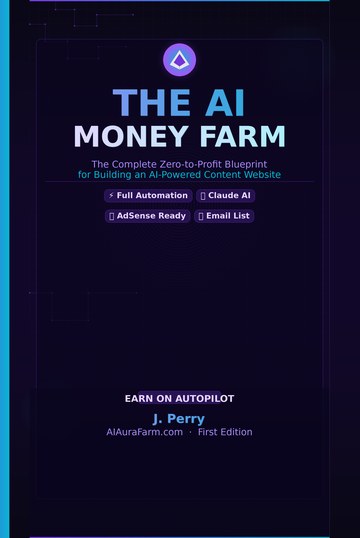
Want to Build a Site Like This One?
The AI Money Farm is the exact step-by-step blueprint behind AIAuraFarm.com.
Get It on Amazon →The short answer: the fastest way to make money with AI in 2026 is selling an AI-boosted service (writing, design, automation, video editing) to businesses, because AI-skilled work pays a documented 40 to 56 percent premium over the same work without AI. The most scalable ways are building AI content sites, micro-SaaS tools, and automation agencies. Below are all 12 methods that actually pay, ranked, with real numbers.
The real numbers first
Most "make money with AI" articles skip the data. We compiled it in our 2026 AI Side Hustle Income Report: the average side hustle pays $1,242/month (LendingTree, 2026) but half of side hustlers earn under $500. The gap-maker is AI skill: PwC's Global AI Jobs Barometer measured a 56 percent wage premium for workers with AI skills, and Upwork data shows AI-fluent freelancers billing 40 percent above comparable non-AI work, with demand for AI skills up 109 percent in a year. In plain terms: the same hours, aimed at AI-native work, pay roughly half again as much.
Sell AI services: fastest path to first dollar
1. AI-boosted freelancing
Take a skill you already have (writing, design, research, spreadsheets) and deliver it 3x faster with ChatGPT, Claude, or Midjourney, at AI-premium rates. Platform data puts median skilled freelancing at $85,000/year full time. Start on Upwork or Fiverr in a niche you know, and use our profession guides to pick your stack.
2. AI automation services
Businesses pay well for workflows that remove manual work: lead follow-up, report generation, invoice chasing, content repurposing. Build them with Make.com, n8n, or Zapier plus an AI step. Sell the outcome ("your leads get a reply in 60 seconds") not the tech. AI integration demand grew 178 percent on Upwork last year, the second-fastest of any skill.
3. AI video and short-form editing
The single fastest-growing AI gig: demand for AI video generation and editing rose 329 percent year over year on Upwork. Creators and brands need shorts, clips, and AI-generated b-roll at volume. Tools: Runway, CapCut, ElevenLabs for voice, Pollinations or Midjourney for stills.
4. AI chatbots and agents for small business
Support bots, booking agents, and lead qualifiers, sold as a monthly retainer. This is agency economics: 10 clients at $500/month is $5,000 recurring. Our AI agent stacks guide covers the full build.
Build AI content assets: scalable and compounding
5. AI content sites
Automated sites that publish daily and earn through ads and affiliates. Slow to start, compounding after. This very site is the case study: it publishes articles, podcasts, videos, and social posts automatically. The complete blueprint is in The AI Money Farm.
6. Faceless YouTube and TikTok channels
AI script, AI voice, AI visuals, human quality control. Monetize via ad revenue, affiliates, and sponsorships. Variance is enormous: most channels earn little, winners earn five figures monthly. Treat it as a portfolio bet, not a paycheck.
7. AI-assisted ebooks and digital products
Guides, templates, prompt packs, planners, and niche books sold on Amazon KDP, Gumroad, or Etsy. Each product is small; the model works at 10+ products. AI cuts production from months to days, but editing and a real niche still decide sales.
8. Print on demand and AI art products
Midjourney or Ideogram designs on shirts, posters, and mugs via Printful or Printify. Margins are thin, so winners run it like a testing machine: many designs, kill losers fast, scale the few that sell. Check copyright rules per platform; see our Q&A Blog for the AI image copyright answer.
Build AI products: biggest ceiling, most work
9. Micro-SaaS
Small, focused software solving one expensive problem, built with AI coding tools (Cursor, Claude Code, Lovable) in weekends instead of quarters. The 2026 twist: distribution is the hard part, not the build. Our weekend micro-SaaS guide has the playbook.
10. Custom GPTs and prompt engineering
Specialized assistants and prompt systems for niches (legal intake, real estate listings, e-commerce copy), sold directly to businesses or bundled with consulting. Pure prompt-selling is commoditizing; pairing prompts with implementation is where the money moved.
11. AI consulting
The highest hourly rates in the space: AI strategy consulting bills $80-300/hour, and industry-specific AI work (finance, healthcare) reaches $300/hour. Requires credibility: ship projects first via methods 1-4, then sell the expertise.
12. AI training data and evaluation work
Platforms like DataAnnotation, Outlier, and Alignerr pay for rating AI outputs and writing training examples. The floor of this list but the most reliable: real hourly pay, no clients, immediate start. AI data annotation demand grew 154 percent last year. Good as bridge income while building methods above.
The 30-day beginner path
If you're starting from zero: week 1, pick ONE method matching your existing skill and set up the tools (our free 8-day course walks this exactly). Week 2, produce three portfolio pieces using AI and document the before/after speed. Week 3, pitch daily: 10 outreach messages or listings per day, priced 20 percent under market to buy reviews. Week 4, raise prices to market and reinvest in the tool stack. Use our income calculators to set targets, and expect the realistic curve: under $500 the first month, compounding after.
What's working right now: July 2026
AI video editing remains the fastest-growing paid skill (up 329 percent on Upwork year over year), agent-building retainers are the strongest recurring model as businesses move from chatbots to task-completing agents, and AI-skilled freelance rates continue to hold their 40+ percent premium. The newest shift: companies increasingly hire for AI implementation outcomes rather than tool knowledge, so portfolios showing measured results (hours saved, response times, revenue) are outperforming certificates. This section is re-researched and rewritten automatically every month.
FAQ
Can you really make money with AI?
Yes, and the data is unambiguous: AI-skilled workers earn a 56 percent premium (PwC) and AI freelance demand doubled in a year (Upwork). But most earners make hundreds per month, not thousands. The methods that pay fastest are services; the ones that scale are content assets and products.
How can a beginner make money with AI with no experience?
Start with AI-boosted freelancing in a skill you already have, or AI training data work for immediate hourly pay. Both reach first dollar within 1-3 weeks with zero startup cost. Avoid starting with content sites or SaaS; they pay nothing for months.
How much money can you make with AI per month?
Realistic ranges in 2026: $500-5,000/month for AI freelancing, $1,000-15,000 for automation services, $80-300/hour for AI consulting, and $0-10,000+ for content sites and micro-SaaS depending on traction. Half of all side hustlers earn under $500/month, so treat higher figures as the ceiling, not the median.
What is the best AI tool to make money with?
There is no single best tool; there are best stacks per method. ChatGPT or Claude plus your domain skill for services, Make.com or n8n for automation, Runway and ElevenLabs for video, Cursor or Lovable for products. Our weekly-updated tier list ranks the current models.
Is making money with AI still worth it in 2026, or is it saturated?
Generic AI work (basic prompt writing, unedited AI content) is saturated and rates are falling. Specialized AI work is the opposite: vertical expertise plus AI skills commands 2-3x rates, and demand for hands-on skills like AI video (+329 percent) and integration (+178 percent) is outrunning supply.