The 9 Best AI Tools for Doctors in 2026
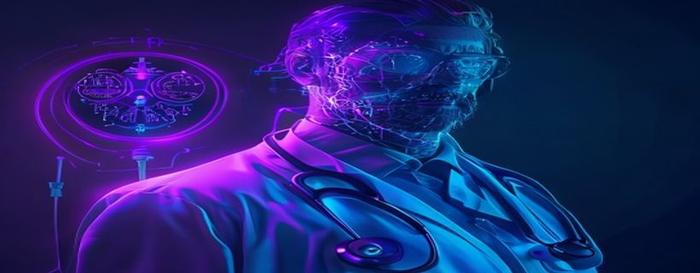
Physicians spend roughly two hours on documentation and desk work for every hour of direct patient care, and after-hours charting remains a leading driver of burnout. The current generation of clinical AI attacks exactly that problem. Here are the nine tools genuinely changing physician workflows in 2026, what they cost, and where the hard safety lines sit.
Start Aura Farming
Top AI money moves delivered every morning - free forever.
Want to Build a Site Like This One?
The AI Money Farm is the exact step-by-step blueprint behind AIAuraFarm.com.
Get It on Amazon →The State of Clinical AI, Honestly
The breakout category is the ambient AI scribe: software that listens to the visit with patient consent and produces a structured clinical note before you leave the room. Health systems have deployed these to tens of thousands of clinicians, and peer-reviewed evaluations consistently show reduced documentation burden and lower burnout scores, with time savings that vary by specialty and note style. The second wave is evidence and decision support: tools that answer clinical questions with citations into the literature at the point of care.
The hard line that has not moved: AI supports clinical judgment, it does not replace it. Diagnosis, treatment selection, and anything touching an individual patient's care remain physician decisions, and every tool below is positioned, legally and practically, as an assistant. Anything handling patient data must be deployed under a Business Associate Agreement and your organization's governance. Consumer chatbots on personal accounts are not HIPAA-compliant venues for patient information, full stop.
⚡ Quick Picks
The 9 Best AI Tools for Doctors
1. Microsoft Dragon Copilot Best Enterprise Scribe
The successor to Nuance DAX, Dragon Copilot combines ambient listening, voice dictation, and generative drafting directly inside major EHR workflows. It produces specialty-tuned notes, drafts after-visit summaries and referral letters, and answers queries against the chart. Deep Epic integration and Microsoft's healthcare compliance stack are why large systems keep choosing it. If your organization offers it, the correct move is simply to enroll and personalize your note templates.
Pros
- Deepest EHR integration in the category
- Combines dictation, ambient notes, and chart Q&A
- Enterprise-grade compliance posture
Cons
- Only available through organizational deployment
- Notes still require physician review and signature
2. Abridge Best-in-Class Ambient Notes
Abridge grew from a Pittsburgh startup into one of the most widely deployed ambient documentation platforms in US health systems. Its differentiator is what it calls linked evidence: every line of the generated note maps back to the moment in the conversation that supports it, making verification fast instead of tedious. Strong multilingual support and specialty coverage round it out. Clinician satisfaction scores in published deployments are among the best in the category.
3. OpenEvidence Best Evidence Engine
OpenEvidence answers clinical questions in seconds with synthesized, citation-backed responses drawn from the medical literature, including content partnerships with leading journals. It became one of the fastest-adopted tools in medicine because it is free for verified clinicians and genuinely useful in the two minutes between patients: dosing nuances, guideline updates, trial evidence for an unusual presentation. Treat it as a fast librarian, not an oracle: read the underlying sources for consequential decisions.
4. UpToDate Most Trusted Reference
The reference physicians already trust has added AI search and conversational features that surface its expert-written, editorially reviewed content faster. The value proposition is inverted from a chatbot: instead of generating an answer that sounds right, it retrieves an answer a specialist wrote and maintains. For treatment decisions, that editorial layer is exactly what you want. Most hospital systems provide access; independents should budget for it as core infrastructure.
5. Freed Best Scribe for Independents
Freed brought ambient scribing to clinicians who do not have an enterprise IT department: record the visit on your phone or browser, get a structured SOAP note in about a minute, edit, and paste into any EHR. It learns your note style over time and offers a BAA. For a solo family physician, the math is simple: if it saves one hour of evening charting a day, it pays for itself many times over. Heidi Health is the strong alternative at a similar price point with deeper template customization.
6. Doximity GPT Best Free Admin Assistant
Doximity's HIPAA-conscious AI assistant is tuned for the paperwork nobody went to medical school for: prior authorization requests, insurance appeal letters, patient instructions at a specified reading level, referral notes, and work letters. It is free with a verified Doximity account and produces drafts that need light editing rather than full rewrites. For the sheer hours-per-dollar ratio, nothing in clinical AI beats free and useful.
7. Glass Health Best Reasoning Companion
Glass generates differential diagnoses and draft clinical plans from a problem representation, grounded in a curated, physician-maintained knowledge base rather than the open internet. It is explicitly positioned as clinical decision support for clinicians, and it shines as a cognitive check: paste a tight one-liner, compare its differential against yours, and notice what you had not considered. Residents and hospitalists are its natural audience, and it doubles as a superb teaching tool on rounds.
8. Claude Best General Model for Medicine-Adjacent Work
For everything around clinical care that does not involve patient data, a frontier general model earns its seat: summarizing a stack of papers for journal club, drafting a lecture, writing patient education materials, preparing grant and quality-improvement documents, or explaining a mechanism you half-remember from biochemistry. Claude's long-document handling and careful tone fit medical writing well. The rule remains absolute: no protected health information on consumer accounts, ever. Enterprise deployments with BAAs are a different conversation your organization can have.
9. Viz.ai Best Care-Coordination AI
Viz.ai represents the FDA-cleared, imaging-triggered category: algorithms that flag suspected large vessel occlusion strokes, pulmonary embolism, aortic disease, and more from imaging as it is acquired, then alert the right specialist's phone in minutes. Published studies show meaningful reductions in time-to-treatment for stroke workflows. Individual physicians do not buy it, but champions inside hospitals drive its adoption, and it is the clearest example of AI that moves hard clinical outcomes today.
Where the Time Actually Goes, and Comes Back
Across published deployments, ambient scribes consistently cut after-hours charting, reduce burnout measures, and let physicians face the patient instead of the screen. Reported time savings vary widely with specialty and baseline documentation habits. The pattern worth noticing: the technology gives back minutes per encounter, and across twenty encounters a day that becomes the difference between leaving on time and pajama-time charting.
Adoption Rules for Clinicians
Frequently Asked Questions
Are AI scribes accurate enough to trust?
Accuracy is high and improving, with most errors being omissions or minor attribution slips caught on review. The workflow is draft-plus-review, not autopilot. Tools like Abridge that link each sentence to the audio make review genuinely fast.
Can I use ChatGPT or Claude with patient information?
Not on consumer accounts; they are not HIPAA-compliant environments and no BAA covers them. De-identified, non-reidentifiable use for education is defensible; anything identifiable requires an enterprise deployment with a BAA through your organization.
Will AI diagnosis tools replace physicians?
The deployed reality is narrower and more useful: AI flags, prioritizes, and drafts while physicians decide. Regulatory frameworks, liability, and the irreducibly human parts of care all point the same direction for the foreseeable future.
What should a resident or student adopt first?
OpenEvidence and Glass Health, both free, cover evidence lookup and differential practice. Add a general model for teaching materials and research synthesis. Learn the tools now; attending life will assume fluency.
The Bottom Line
Clinical AI in 2026 is finally aimed at the right target: the documentation and information burden that was consuming physicians. An ambient scribe, an evidence engine, and a free admin assistant together return hours every week for costs that range from nothing to one copay's worth of subscription. Adopt through proper channels, verify what you sign, and spend the recovered hours on the two things no model does: examining the patient in front of you and going home on time.