What Is Test-Time Compute?

Spending extra computing power during inference to get better answers, not just during training. Here is the plain-English deep dive: what it means, why it matters, and how to use the concept in practice.
Start Aura Farming
Top AI money moves delivered every morning - free forever.
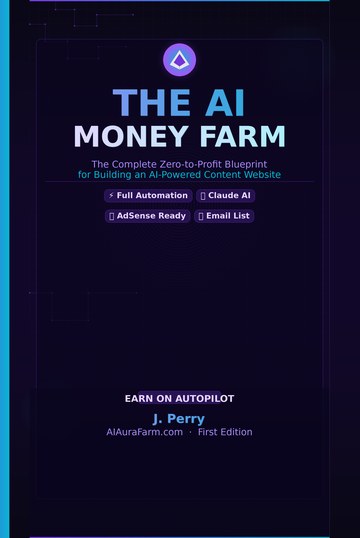
Want to Build a Site Like This One?
The AI Money Farm is the exact step-by-step blueprint behind AIAuraFarm.com.
Get It on Amazon →What Is Test-Time Compute?
Test-time compute is the idea of throwing more processing power at a problem right when you're using an AI model, rather than only investing in training it upfront. Think of it like this: you can either spend weeks learning to cook perfectly in advance, or you can spend extra time on a single meal, tasting and adjusting as you go. With test-time compute, you're doing the latter. An LLM normally generates an answer in one pass. With test-time compute, it might think through the problem multiple ways, check its work, or explore different reasoning paths before giving you a final answer. The model itself doesn't change, but you're using it harder and longer on each individual request.
Here's where you actually see this in practice: When you ask ChatGPT to use "reasoning mode" or when an AI spends extra time working through a math problem step by step, that's test-time compute in action. The model is doing more inference work on your specific question. Instead of immediately blurting out an answer, it might generate multiple candidate solutions, evaluate them against each other, or use chain-of-thought reasoning to break complex problems into smaller pieces. All of this happens after training is done, right when you're using the model. It's also why some AI services let you choose between "fast mode" and "thorough mode" for responses.
Why does this matter? Because it's a practical lever for making AI better without retraining. Training a giant model costs millions and takes months. But if you can get measurably better answers by letting it think longer, that's cheap compared to the alternative. It also matters for risk: when an AI has more time to reason through an answer, it tends to catch its own hallucinations and mistakes more often. The tradeoff is speed and cost on your end as a user-you might wait longer for a response, and it might cost the provider more to serve. This is why test-time compute is becoming a real business decision: companies have to weigh whether the quality bump is worth the latency and expense.
The practical rule of thumb: test-time compute is the new frontier for AI improvement, and you should expect to see it built into more tools. If you're using AI for something where accuracy really matters (writing, coding, analysis), look for options that let you request "deeper thinking" or extra reasoning steps. It's not magic, but it does work, and understanding that it exists helps you use AI tools more strategically instead of just accepting the first answer you get.