What Is Neural Network?
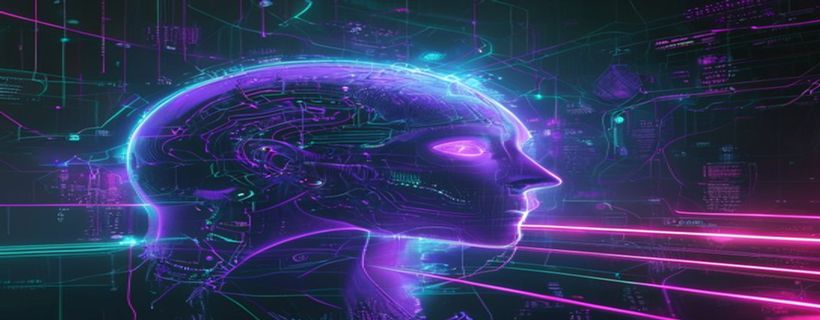
A computer system loosely modeled on brain cells that learns patterns from examples instead of following fixed rules. Here is the plain-English deep dive: what it means, why it matters, and how to use the concept in practice.
Start Aura Farming
Top AI money moves delivered every morning - free forever.

Want to Build a Site Like This One?
The AI Money Farm is the exact step-by-step blueprint behind AIAuraFarm.com.
Get It on Amazon →What Is Neural Network?
A neural network is a type of computer system that learns by example rather than by being told exact rules. Think about how you learned to recognize a dog as a kid. Nobody handed you a checklist like "four legs, fur, wags tail, barks." You just saw a bunch of dogs, sometimes wrong, sometimes corrected, and eventually your brain figured out the pattern on its own. A neural network does something similar with math. You feed it thousands or millions of examples (photos labeled "dog" or "not dog," sentences and their translations, whatever the task is) and it gradually adjusts its internal settings until it gets good at spotting the pattern itself. Nobody programs the rules directly. The network discovers them.
Under the hood, a neural network is built from layers of simple math units called "neurons," loosely inspired by how brain cells connect and fire. Each neuron takes some numbers in, does a small calculation, and passes a result to the next layer. Stack enough of these layers together and the network can represent shockingly complex patterns, like the shape of a face, the grammar of a sentence, or the sound of a specific voice. You interact with neural networks constantly without seeing them: your phone's face unlock, Spotify's recommendations, spam filters, and every modern LLM chatbot are neural networks under the hood. Newer architectures like the transformer are just a particular, very effective way of arranging those layers, especially good at handling language and context.
This matters practically because neural networks are what made the current AI boom possible. Before them, software could only do what a programmer explicitly coded. Neural networks flipped that: give the system enough examples and computing power, and it can learn tasks that would be nearly impossible to hand-code, like understanding messy human language or recognizing objects in cluttered photos. That capability is why AI tools got so much better so fast, and it's also the source of AI's weirder failures. Because the network learned patterns statistically rather than through logical rules, it can confidently produce something wrong or made up, which is part of why hallucination happens. It also means results depend heavily on training data. Garbage or biased examples in, garbage or biased behavior out.
The practical rule of thumb: whenever an AI product seems to "understand" or "generate" rather than just look things up, there's very likely a neural network doing the heavy lifting, and that network learned its behavior from data rather than from explicit instructions. That's useful context when something misbehaves. It's rarely a simple bug you can patch line by line; it's more like the system's "intuition" being off, shaped by whatever it was trained on. Understanding this helps set realistic expectations: neural networks are pattern-matchers, not truth-checkers, so treat their outputs as a smart guess worth verifying, not gospel.