The 9 Best AI Tools for Restaurant Owners in 2026

Restaurant owners juggle inventory, staffing, customer service, and margins constantly. AI is reshaping how forward-thinking restaurants handle scheduling, inventory forecasting, and personalized customer retention. Here are the tools actually making a difference.
Start Aura Farming
Top AI money moves delivered every morning - free forever.
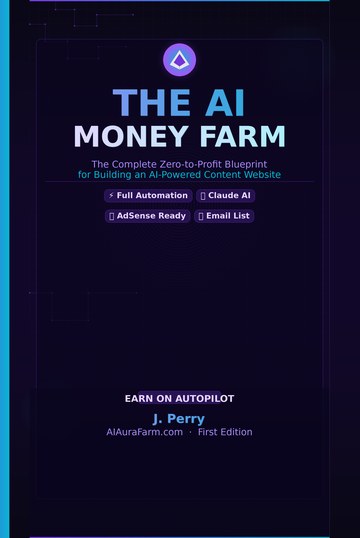
Want to Build a Site Like This One?
The AI Money Farm is the exact step-by-step blueprint behind AIAuraFarm.com.
Get It on Amazon →The Specific Problems AI Solves for Restaurant Owners
Running a restaurant means fighting rising food costs, unpredictable labor availability, inconsistent customer communication, and razor-thin margins. Most owners track inventory with spreadsheets, make scheduling decisions by gut feeling, and respond to customer complaints hours later. AI tools address these pain points directly: automating routine tasks, predicting demand to reduce waste, and handling customer interactions at scale without adding headcount.
The barrier is not whether AI helps, but finding tools that integrate with existing systems (POS, reservation platforms, accounting software) without requiring a tech team to implement. Many restaurant-specific solutions have matured since 2024, and general-purpose AI assistants like ChatGPT and Claude are now cheap enough to justify experimenting with for menu writing, staff training, and competitive research. The practical question is which tools deliver the fastest return and lowest setup friction for a typical multi-unit or single-location owner.
⚡ Quick Picks
The Best AI Tools for Restaurant Owners
1. Toast POS with AI Features Best Overall
Toast is the POS system most mid-size and growing restaurants already use, and its AI layer now includes labor scheduling recommendations, dynamic pricing suggestions, and menu item performance analysis tied directly to your sales data. The key advantage is that AI insights live in the same dashboard where you manage orders and staff, eliminating data export friction. Limitations: Toast's AI is fairly basic compared to custom implementations, and smaller restaurants with legacy systems may find migration costly.
2. MarginEdge AI Inventory & Cost Control
MarginEdge uses computer vision and AI to track inventory changes automatically, flagging spoilage, theft, and over-ordering patterns that typically hide in manual counts. Restaurants report typically saving 2-5% on food costs within 90 days, which compounds fast at standard margins. The AI learns your supplier patterns and menu seasonality to suggest better purchasing. Limitation: requires initial training on your ingredient setup, and works best with consistent inventory discipline.
3. 7shifts AI-Powered Labor Scheduling
7shifts applies demand forecasting AI to predict peak hours and recommend optimal staffing levels, then automates the grunt work of shift swaps and availability. Staff can pick shifts via a mobile app, reducing admin time. The AI learns your historical traffic patterns, events, and weather impacts to adjust suggestions. Downside: smaller teams may find the interface overkill, and the AI relies on historical data quality, so early adoption has a ramp period.
4. Chatbase / Intercom AI Customer Service Automation
Deploy a trained AI chatbot on your website or Google Business profile to answer common questions (hours, delivery, dietary info, reservations) 24/7 without hiring a phone operator. Chatbase is lighter weight and faster to train on your own FAQ; Intercom integrates deeper with CRM and email. Both reduce repeat phone calls by an estimated 30-40% and flag complex issues (complaints, feedback) to a human. Caution: customer data security and privacy (CCPA, GDPR) must be assured with your provider; confirm their data handling policies upfront.
5. Claude (Anthropic) / ChatGPT General AI Workhorse
Use a general-purpose AI to draft menu descriptions, write training documents, brainstorm promotions, or analyze competitor pricing and reviews. Claude (via web or API) is often preferred by restaurant owners for clarity and reduced hallucination; ChatGPT has larger integration ecosystem. Both are cheap enough to experiment with daily. The realistic limit is that neither replaces domain-specific tools for operational decisions, but both save 5-10 hours weekly on writing and planning tasks.
6. Plate IQ Supplier & Menu Costing
Plate IQ aggregates pricing from hundreds of suppliers and applies AI to recommend the best buy options per ingredient, automatically recalculating recipe costs when prices shift. The platform flags margin-eroding recipes and suggests menu price adjustments to stay competitive. Many operators see 8-12% savings on food spend in the first year. Trade-off: requires adoption by the whole purchasing team and integration with your existing supplier relationships, which can take 2-3 months to flow smoothly.
7. HubSpot CRM + AI Customer Retention & Marketing
Build a simple CRM of regular customers and use HubSpot's AI content generator to personalize email offers, birthday promotions, and re-engagement campaigns based on purchase history. The AI recommends optimal send times and offer types to maximize open and redemption rates. Free tier is sufficient for single-location owners; multi-unit benefits from higher tiers. Note: ensure email list management complies with CAN-SPAM and local regulations; disclose your use of customer data in promotions.
8. Loom / Synthesia AI Video for Training & Marketing
Generate training videos or promotional clips without a camera or crew. Loom records screen + voice easily; Synthesia creates AI-generated spokesperson videos from text. Both save significant time vs. filming real training content. Restaurants use these for onboarding, demonstrating plating techniques, or quick social posts. Limitation: AI video still has a visible artificial tone; best for internal or informal use rather than premium marketing.
9. Notion AI Documentation & Operations Manual
Use Notion as your central operations hub and let the built-in AI assistant auto-generate SOPs, checklists, and training docs from voice notes or rough outlines. This is especially valuable for multi-location operators scaling consistency. The AI keeps your team playbook up to date without manual rewrites. Weakness: Notion is not a specialized restaurant tool, so you're building custom workflows rather than using pre-built templates.
How to Adopt AI Tools in Your Restaurant: 5 Steps
Frequently Asked Questions
Do I need AI if I'm a small single-location restaurant?
Not all of it, but a few tools are worth trying. A free or cheap general AI assistant (Claude, ChatGPT) for menu writing and marketing, plus a basic inventory tracking tool, often pay for themselves in reduced waste or recovered scheduling hours. Start with one tool and measure the return before expanding.
Will AI tools eliminate my need for staff?
No. AI reduces routine admin work (scheduling, basic customer service, inventory counts) but cannot replace cooks, servers, or managers. The typical outcome is that existing staff spend less time on paperwork and more time on customer service or quality control, improving experience and margins.
How do I keep customer data secure if I use an AI chatbot?
Vet your vendor's data privacy policy and encryption standards before deploying. Avoid feeding the chatbot sensitive payment or health info; it should handle only FAQs, reservations, and order status. Ensure the tool is compliant with local data protection laws (CCPA in California, for example). Most reputable platforms (Intercom, Chatbase) offer SOC 2 or similar certifications.
What if my POS doesn't integrate with the AI tool I want?
Many tools offer API connectors or Zapier automation to bridge incompatible systems; this adds slight latency but works. Alternatively, you may export data manually (CSV) weekly or monthly if the tool doesn't need real-time sync. Check the vendor's integration library and support team before committing, and ask how many restaurants with your POS use them successfully.
The Bottom Line
AI for restaurant owners is no longer experimental. Tools like Toast, MarginEdge, 7shifts, and Chatbase are delivering measurable returns in food cost reduction, labor efficiency, and customer satisfaction at price points (typically $100-500/month combined) that justify a trial. Start by identifying your costliest operational bottleneck, pick one or two tools that address it, and measure impact after 90 days before scaling further. The ownership of customer data and privacy is your responsibility, so review vendor policies before launch. Used thoughtfully, AI doesn't replace your team but makes them significantly more productive, freeing you to focus on menu, service, and growth.