The 8 Best AI Tools for Journalists in 2026

AI is transforming journalism by automating research, transcribing interviews, and helping verify facts at scale. This guide reviews the tools that actually save journalists time while maintaining editorial integrity.
Start Aura Farming
Top AI money moves delivered every morning - free forever.
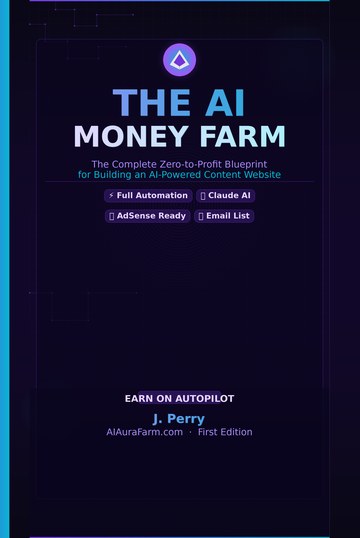
Want to Build a Site Like This One?
The AI Money Farm is the exact step-by-step blueprint behind AIAuraFarm.com.
Get It on Amazon →How AI Helps Journalists Work Smarter
Journalists face mounting pressure: shrinking deadlines, vast information landscapes to navigate, and the constant need to verify claims across multiple sources. Traditional workflows that took hours-transcribing interviews, researching background facts, organizing sources-now bottleneck reporting quality. AI tools address this directly by handling routine research, summarizing documents, and flagging potential factual inconsistencies, freeing reporters to focus on investigation, interviewing, and analysis where human judgment matters most.
The catch is that not all AI tools are built for journalism's specific needs. General-purpose assistants like ChatGPT can help, but they lack real-time web access and fact-checking grounding that journalists rely on. Specialized platforms designed for research, transcription, and verification offer better reliability and transparency about sources. This guide covers both categories: the all-purpose assistants worth keeping in your toolkit and the profession-specific platforms that reduce errors and save hours per week.
⚡ Quick Picks
The Best AI Tools for Journalists
1. Perplexity AI Best Overall
Perplexity functions like a search engine merged with a conversational AI, which is exactly what journalists need. It searches the web in real-time, cites specific sources inline, and lets you ask follow-up questions without losing context. Unlike ChatGPT's knowledge cutoff limitations, Perplexity pulls current information, making it invaluable for breaking news verification and recent trend research. The main limitation is that you're still responsible for verifying claims; Perplexity can hallucinate or misinterpret sources just like any LLM, so always check original sources yourself.
2. Otter.ai Transcription Leader
Otter.ai converts audio interviews, press conferences, and podcast recordings into searchable transcripts with 95%+ accuracy for clear audio. You can record directly in the app or upload existing files, and it timestamps speakers automatically. For journalists interviewing sources, this eliminates hours of manual transcription and creates a searchable archive of your reporting. The free tier gets you 600 minutes monthly, which covers roughly 10 hours of interviews; the paid tier is worth it if you do multiple interviews weekly and need real-time transcription during live events.
3. Google Gemini Advanced Research & Analysis
Gemini Advanced excels at processing long documents, PDFs, and datasets that journalists often work with: government reports, leaked emails, statistical datasets, and research papers. It can summarize a 50-page court filing in seconds, extract key figures from financial reports, or compare multiple sources side-by-side. The web search integration means it has current information. The trade-off is that Gemini is still developing specialized journalism features compared to dedicated tools, and its reasoning can be less transparent about sources than Perplexity.
4. Claude 3.5 (via Claude.ai) Writing & Clarity
Claude is widely regarded as the strongest writing AI for editing and refining prose. Journalists use it to tighten ledes, cut jargon from technical stories, generate headline alternatives, and catch tone issues. It's also excellent at explaining complex topics in plain language, which helps verify that you can actually explain what you're reporting. The limitation: Claude doesn't search the web natively (you must paste text in), so it's not ideal for initial research, but it's superior for the polishing and clarity phase of the writing process.
5. ChatGPT with Web Search Fact Verification
ChatGPT's web search feature (available on Plus tier) lets you ask questions about recent events and get current answers with source links. Journalists use it to verify recent claims, cross-check quotes in statements, and understand breaking developments quickly. It's faster than Google for conversational queries and can synthesize multiple sources into a coherent summary. However, like all LLMs, it can misinterpret sources or cherry-pick quotes, so use it as a starting point, not a final authority. Always check the original sources it cites.
6. Copy.ai Rapid Drafting
Copy.ai's strength is speed and templates. It excels at generating multiple headline options, drafting social media snippets from your article, and creating story outlines from a topic or research note. Journalists use it to brainstorm angles and structure pieces before deep reporting. The limitation is that it's less nuanced than Claude for complex writing tasks and shouldn't be relied on for final copy without extensive human editing. It's best used as a brainstorming partner early in the reporting process.
7. Descript Audio/Video Editing
Descript transcribes video and audio, then lets you edit by editing the transcript (the video/audio syncs automatically). This is a game-changer for journalists producing multimedia content, podcasts, or video explainers. You can remove filler words, rearrange segments, and add B-roll all from the transcript interface. It also has speaker identification and can separate overlapping voices. The trade-off is that accuracy drops with background noise or multiple speakers talking over each other; you'll often need to manually clean up transcripts, but it's still faster than traditional editing.
8. NewsGuard AI Source Verification
NewsGuard is a specialized platform that rates the credibility of news organizations, websites, and publishers using human experts and AI analysis. It's designed specifically for journalists and fact-checkers who need to verify whether a source is reliable. The tool flags outlets with histories of misinformation or partisan bias, which helps you assess whether you should cite or interview someone from that outlet. The limitation is price: it's typically only available to large newsrooms or subscription customers, making it less accessible than the above tools. But if your organization subscribes, it's invaluable for source vetting.
How to Adopt AI Tools in Your Journalism Workflow
Frequently Asked Questions
Can I publish AI-assisted content without disclosing I used AI?
This depends on your organization's ethics guidelines and the extent of AI use. Many journalism associations recommend disclosing AI assistance for transcription, research, or writing support, especially if the AI was used for significant portions of final copy. If AI only helped with transcription or fact-checking in the background, disclosure is typically not required, but check with your editor. Transparency builds reader trust and is increasingly expected.
What if an AI tool gets a fact wrong in my research?
This is why verification is non-negotiable. Never rely on AI tools as your sole source of truth. Always trace claims back to original documents, databases, or named sources. Think of AI as a research assistant that speeds up your search process, not as a fact-checker. If you find an error, it's a sign to slow down and manually verify all claims before publication.
Are there privacy concerns with uploading interview recordings or documents to AI tools?
Yes. Check whether your sources consented to their recorded words being processed by third-party AI services. Some journalists use local transcription tools or enterprise plans with stricter data handling. For sensitive reporting involving vulnerable sources or confidential documents, ask your legal/compliance team whether a specific tool meets your organization's privacy standards before uploading content.
Which tool is best for breaking news verification?
Perplexity AI is the fastest for breaking news because it searches in real-time and cites sources. However, use it to rapidly gather context and find sources, not as your final verification. Immediately pull the original sources Perplexity mentions, call sources directly, and cross-check claims with established news outlets and official statements. Speed matters in breaking news, but accuracy matters more.
The Bottom Line
AI tools in 2026 are mature enough to meaningfully speed up journalism workflows: transcription saves hours per week, research tools like Perplexity cut research time by a third, and writing assistants like Claude tighten copy faster. The tools that deliver the most value are specialized platforms like Otter.ai for transcription and Perplexity for research, combined with general-purpose assistants for editing and fact-checking. The real cost is time: you must build verification into every workflow where you use AI, and you need to stay transparent with your sources and readers. Budget roughly $60 to $100 per month for a complete AI toolkit (Perplexity Pro, Otter.ai, and ChatGPT Plus), though free tiers can cover basic needs if you're careful about accuracy. The journalists winning with AI aren't replacing their judgment; they're automating the grunt work so they have more time to report.