The 9 Best AI Tools for Executive Assistants in 2026

Executive assistants juggle competing priorities, endless emails, and complex scheduling across multiple stakeholders. AI tools now handle the repetitive cognitive work that used to consume hours each week, freeing you to focus on strategic support and relationship management.
Start Aura Farming
Top AI money moves delivered every morning - free forever.
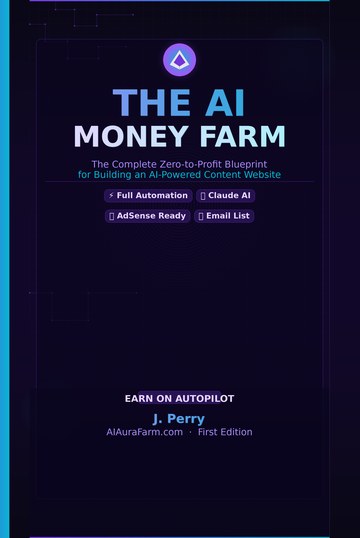
Want to Build a Site Like This One?
The AI Money Farm is the exact step-by-step blueprint behind AIAuraFarm.com.
Get It on Amazon →Why Executive Assistants Need AI (Right Now)
The role of an executive assistant has fundamentally shifted. You're no longer just managing a calendar and filtering emails; you're expected to synthesize information, anticipate needs, coordinate across time zones, and manage sensitive stakeholder relationships. The problem is that these higher-value tasks compete with administrative grunt work that still demands accuracy and speed. Most EA teams report spending 20-30% of their time on manual data entry, email sorting, and meeting coordination tasks that AI can now handle reliably.
The secondary problem is information overload. Executives receive hundreds of messages daily, attend back-to-back meetings, and expect their assistant to surface what matters. Without AI, you're manually reading every email, taking notes in multiple formats, and hoping you didn't miss a critical deadline buried in a Slack thread. The cost of this inefficiency isn't just your stress; it's decisions made on incomplete information and missed opportunities. AI tools solve this by automating triage, creating unified summaries, and flagging what actually needs human attention.
⚡ Quick Picks
The Best AI Tools for Executive Assistants
1. Claude (Anthropic) Best Overall
Claude is the most capable general-purpose AI assistant for executives and their teams. It excels at drafting complex documents, summarizing long email threads, analyzing competitive intelligence, and brainstorming strategy without the guardrail friction of some competitors. For EAs specifically, Claude handles multi-step requests ("draft a board meeting agenda, then create a stakeholder briefing from these 12 documents") with remarkable coherence. The main limitation is that it doesn't integrate natively with your calendar or email system, so you're manually feeding it information rather than having it monitor your inbox continuously.
2. Cal.com AI Scheduling Specialist
Cal.com's AI handles the specific EA workflow of managing executive calendars across zones and stakeholders. It can parse availability requests in natural language ("find time for a 90-minute meeting with these four people next week, but not Tuesday afternoon"), understand meeting types and required prep time, and send professional invites automatically. The AI learns your calendar patterns and can flag conflicts, suggest optimal times, and handle rescheduling without human intervention. The tradeoff is that it requires setup and integration with your existing calendar system, and very complex multi-party negotiations still benefit from human judgment.
3. Superhuman Email Command Center
Superhuman is built specifically for email power users and their assistants. The AI categorizes incoming mail by urgency and type, can auto-reply based on patterns, and surfaces only what needs immediate human attention. It integrates with Gmail and Outlook, allowing you to create custom automation rules ("flag anything from board members yellow, auto-label investor updates, snooze newsletters") without touching code. For EAs managing an executive's inbox, this cuts email processing time by 40-50% according to user reports. The cost is substantial and there's a learning curve on the keyboard shortcuts, but the time savings typically justify it for high-volume inboxes.
4. Fireflies.ai Meeting Intelligence
Fireflies records and transcribes meetings automatically, then extracts action items, decisions, and speaker summaries using AI. For EAs, this means you can attend a meeting and receive a complete transcript with timestamps within minutes, plus an automatically generated summary to share with the executive. The tool integrates with Zoom, Google Meet, Teams, and Webex, making it universally compatible. The main limitation is that it requires active consent and recording, which some clients or external stakeholders may not want. Also, very technical discussions or specialized jargon sometimes need manual cleanup, so it's not fully hands-off.
5. Perplexity AI Research Assistant
Perplexity is a search-focused AI that finds current information across the web and synthesizes it into coherent answers with citations. Unlike ChatGPT's knowledge cutoff, Perplexity accesses real-time data, making it ideal for EAs who need to brief executives on market movements, competitor announcements, or breaking news before meetings. You can ask for summaries of recent earnings reports, industry trends, or biographical research on meeting attendees, and receive sourced, current answers within seconds. The limitation is that it's still search-dependent, so highly specialized or proprietary information requires manual research. The Pro version adds advanced reasoning and file upload capabilities.
6. ChatGPT (OpenAI) Versatile Workhorse
ChatGPT remains the most accessible and widely-used AI for EAs. It's excellent for drafting emails (formal to casual), creating meeting agendas, generating presentation outlines, and building document templates that your team can adapt. The free version handles most routine tasks adequately; the paid version (Plus/Pro with GPT-4o) handles more nuanced writing and can work with documents and images. For EAs, the main appeal is familiarity and zero friction; nearly everyone already uses it. The downside is that it lacks integrations with most calendar and email systems, so again, it's a tool you actively use rather than one that runs in the background monitoring your workflows.
7. Gemini (Google) Ecosystem Integration
If your executive runs on Gmail, Google Calendar, Docs, and Sheets, Gemini's native integration offers real advantages over standalone AI tools. You can ask Gemini to "summarize my calendar conflicts for next week" or "draft a response to this email thread" and it accesses your actual data. For EAs in Google-first organizations, this removes the friction of copy-pasting information into external tools. Gemini is also multimodal, handling images and documents with increasing sophistication. The limitation is that it's less advanced than Claude or GPT-4 for complex reasoning tasks, so many EAs use it for quick routine work and Claude for deeper analysis.
8. Notion AI Knowledge Management
Notion AI is embedded within Notion's workspace tool, enabling you to generate meeting notes, database summaries, and action item lists from existing content. For EAs managing shared knowledge bases, org charts, or project tracking, Notion AI can auto-generate status reports or highlight critical tasks that need escalation. It's particularly useful if your organization already uses Notion for internal processes. The limitation is that Notion AI is best for synthesizing content you've already captured rather than autonomous monitoring. It also requires that your team actively documents in Notion, so if chaos reigns in email and spreadsheets, this tool won't salvage the disorder.
9. Zapier with AI Workflow Automation
Zapier's AI-powered automation bridges disconnected systems. You can create workflows like "when a new contact fills out a meeting request form, add them to the calendar, send a confirmation email, and create a prep document" without custom code. For EAs managing integration across 5-10 different tools (CRM, calendar, email, note-taking, etc.), Zapier eliminates manual data shuffling. The AI interprets natural language instructions to build workflows, making it more intuitive than traditional automation. The trade-off is that very complex logic sometimes requires human refinement, and you pay per task executed, so high-volume processes can become expensive at scale.
How to Adopt AI Tools as an Executive Assistant
Frequently Asked Questions
Is it safe to use AI with confidential executive information?
It depends on the tool and your organization's policies. Paid, enterprise-grade tools (Claude, ChatGPT Plus, Google Workspace AI) typically have stronger data privacy commitments than free public versions. Never paste board meeting notes, M&A plans, or personal executive information into free ChatGPT. Consult your legal or IT department before deploying AI to handle sensitive workflows; many organizations have specific approval processes for generative AI use.
Will AI replace executive assistants?
No, but it will change the role significantly. AI is excellent at triage, drafting, and routine coordination, but it cannot read a room, build relationships with stakeholders, or make nuanced judgment calls on what actually matters to your executive. The EAs who thrive in 2026 are those who use AI to eliminate low-value admin work and redirect that time toward strategic advisory, stakeholder management, and problem-solving that requires human insight.
How much can I actually save using these tools?
Organizations typically report 30-50% reduction in time spent on email and scheduling after deploying email AI and calendar automation. Tools like Fireflies save 30-60 minutes per week if you attend multiple meetings. The total impact depends on your baseline chaos; if you're already highly organized, gains are smaller. Most EAs see payback on tool costs within the first month if they're actively managing large volumes of communication.
Do I need to learn programming to use these tools?
No. Most tools in this list are designed for non-technical users and offer natural language interfaces. You describe what you want in English, and the AI interprets it. That said, some automation (Zapier) has a mild learning curve, and you'll save time by learning advanced prompting techniques for tools like Claude and ChatGPT, but neither requires coding.
The Bottom Line
Executive assistants in 2026 have access to tools that would have seemed like science fiction five years ago. Email can be triaged automatically, meetings transcribed and summarized in real time, calendars optimized across stakeholders, and research synthesized from current sources within seconds. The realistic investment to transform your workflows is typically $80-150 per month for a solid toolkit (email, scheduling, meeting notes, and general AI), which usually pays for itself within four weeks in reclaimed time. The key is starting with your biggest pain point, mastering one tool deeply, and expanding methodically. Used well, these tools don't make you less necessary; they make you more valuable because you're solving strategic problems instead of drowning in administrative tasks.