The 8 Best AI Tools for Data Analysts in 2026

Data analysts spend half their time on repetitive tasks: cleaning datasets, writing SQL, building dashboards. AI is changing that equation in 2026, automating the grunt work while amplifying human judgment. Here are the tools that actually deliver.
Start Aura Farming
Top AI money moves delivered every morning - free forever.
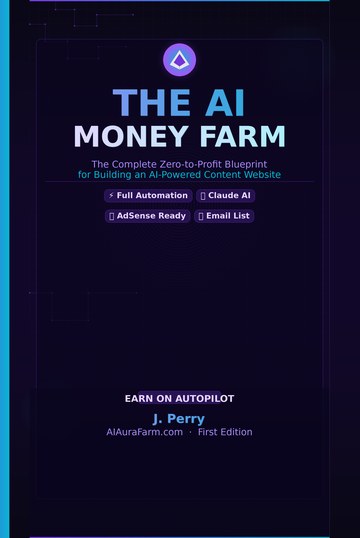
Want to Build a Site Like This One?
The AI Money Farm is the exact step-by-step blueprint behind AIAuraFarm.com.
Get It on Amazon →Why Data Analysts Need AI Right Now
Data analysts face a legitimately difficult problem: the volume of work has exploded, but the time to complete it hasn't expanded. You're expected to clean messy data, write complex SQL queries, spot patterns humans miss, and justify your findings to non-technical stakeholders. Meanwhile, the toolchain keeps fragmenting. Manual data cleaning alone can consume 40 to 60 percent of a project timeline, and that's before you even start analysis. AI tools address this bottleneck directly by automating repetitive transformation tasks, suggesting query logic, and surfacing anomalies you'd otherwise catch only after hours of exploration.
The catch is that not all AI tools are built for data work. General-purpose assistants like ChatGPT and Claude are useful for brainstorming and SQL generation, but they lack the domain context that specialized analytics platforms provide. In 2026, the best setup typically combines a large language model for quick queries and ideation with purpose-built data tools that understand your specific data warehouse schema, version control, and governance rules. Cost and integration friction matter too: a tool that requires manual data export every time defeats the purpose of automation. This guide focuses on tools that actually reduce friction for data teams, not just add another tab to your browser.
⚡ Quick Picks
The Best AI Tools for Data Analysts
1. Grok 3 Best Overall
Grok 3, XAI's reasoning-focused model, has emerged as a practical default for data analysts who need to write queries fast and think through logic clearly. Unlike earlier versions, Grok 3 handles multi-step analysis, can debug your SQL, and explains why a query might fail on your schema. Combined with Claude (which handles structured output and edge-case reasoning better), many teams use Grok for the interactive work and Claude for the heavy-lifting analysis. The free tier is genuinely useful; the Pro version removes rate limits. Main limitation: it doesn't connect directly to your data warehouse, so you're pasting snippets or exporting samples. For confidential or very large datasets, that's actually a feature, not a bug.
2. Claude 3.5 (Anthropic) Advanced Reasoning
Claude excels at the parts of analysis that require judgment: interpreting statistical significance, explaining confounding variables, and writing queries that won't accidentally introduce bias. It reads long data dictionaries without losing context, which matters when your schema has 200+ columns. Many analysts use Claude to sanity-check queries written by junior team members or to generate test cases for edge conditions. The API integration works well with Jupyter notebooks and Python scripts. Fair warning: Claude is slower than Grok for simple queries, and the token cost adds up if you're processing thousands of requests daily. But for complex reasoning, it's worth the overhead.
3. Tableau with Einstein Copilot Visualization & Insight
Tableau has integrated Einstein (Salesforce's AI) to let analysts ask dashboards questions in English: "Show me sales by region for the last quarter, but flag anything down more than 10 percent from last year." Einstein translates that to the right aggregation and filter. It's useful for ad-hoc exploration and for building dashboards that non-analysts can actually use without SQL knowledge. The limitation is that Einstein works best when your data is already modeled well in Tableau; garbage in means garbage out. Licensing is enterprise-grade pricing, so it's more relevant for larger teams. Smaller teams often get more mileage from lightweight tools like Metabase or Looker.
4. SQLMetrics SQL Automation
SQLMetrics sits between your data warehouse and your analysis work. You define metrics once (e.g., "monthly active users"), and SQLMetrics generates the correct SQL every time you reference it, plus tracks lineage and versions. It includes AI-assisted query generation: describe what you want in English, and it drafts SQL against your specific schema. Unlike pasting SQL into ChatGPT (which doesn't know your table names), SQLMetrics understands your warehouse structure and enforces naming conventions. Teams report that this cuts analysis rework by about 30 percent because the metric definition is centralized and tested. Main trade-off: requires connecting SQLMetrics to your data warehouse, which means API access and some upfront schema mapping.
5. Great Expectations with AI Data Quality
Data quality is the unglamorous foundation of good analysis, and Great Expectations uses AI to automate it. You feed it sample data, and it learns typical patterns, ranges, and distributions. Then it flags deviations in production pipelines: missing values spiking, a field that should be numeric suddenly containing text, categories vanishing. This catches data bugs before they poison your analysis. The AI doesn't replace domain knowledge (you still need to define what "normal" means for your business), but it cuts the work of writing validation rules from hours to minutes. The open-source version is fully capable; the Cloud tier adds alerting and a UI. Many data teams consider this essential infrastructure, not optional.
6. Infused Analytics Schema Understanding
Many analysts spend their first week on a new project just figuring out the data model: which table is the source of truth, what do these cryptic column names mean, which joins are safe. Infused Analytics uses AI to accelerate that learning. You upload your schema, and it builds a semantic layer with AI-enhanced documentation, suggests likely join paths, and answers "show me all customer-related tables" without you naming them manually. The real payoff is speed: new analysts ramp up in days instead of weeks. It also generates natural-language explanations of queries for documentation. Limitation: it's not a direct replacement for good data governance; if your schema is a mess, AI can only help so much.
7. Metabase with AI Assistant Lightweight & Accessible
Metabase is simpler and cheaper than Tableau or Looker, and its AI assistant (available in Cloud Pro tier) generates questions and SQL from natural language. For teams of 5 to 30 analysts and stakeholders, it's often the sweet spot: no complicated licensing, straightforward setup, and enough AI assistance to speed up routine queries. The open-source version is genuinely production-ready; you're just sacrificing the cloud hosting convenience. Trade-off: it's not as feature-rich as enterprise tools, and the AI assistant is good but not as sophisticated as Grok or Claude for complex reasoning.
8. Thoughtworks Intelligent Data Platform Enterprise Lineage
For large teams managing hundreds of dashboards and data products, Thoughtworks IDP adds AI-driven lineage tracking: you change a field, and the system automatically maps which dashboards, reports, and analyses depend on it, then flags what might break. This is less about writing better SQL and more about preventing analysis disasters in complex organizations. It's expensive and overkill for small teams, but for regulated industries (financial services, healthcare) where data provenance is non-negotiable, it's become standard infrastructure. Note that this is more of a data governance layer than an analysis tool; most teams pair it with the other tools in this list.