The 9 Best AI Tools for Chiropractors in 2026

AI is transforming chiropractic practices by automating administrative tasks, improving patient outcomes, and freeing up time for hands-on care. We've tested and reviewed the best AI tools specifically suited to chiropractic businesses in 2026.
Start Aura Farming
Top AI money moves delivered every morning - free forever.
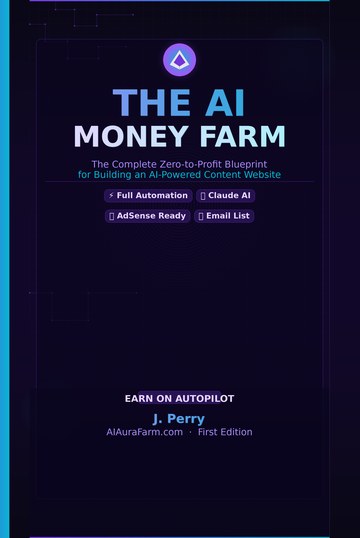
Want to Build a Site Like This One?
The AI Money Farm is the exact step-by-step blueprint behind AIAuraFarm.com.
Get It on Amazon →The AI Problem Chiropractors Face
Chiropractic practices are drowning in paperwork. Between patient intake forms, clinical notes, insurance claims, appointment scheduling, and follow-up reminders, administrative overhead eats up 30-40 percent of a chiropractor's workday. That's time not spent with patients, building relationships, or delivering the adjustments and therapy that drew you to the profession in the first place. Most chiropractic software platforms still rely on outdated workflows, forcing staff to re-enter data across multiple systems and manually chase down payment information.
AI tools now solve these specific bottlenecks. Modern AI can transcribe clinical notes in real time, auto-generate treatment summaries, predict no-shows before they happen, handle insurance verification instantly, and even manage patient communication at scale without losing the personal touch. The challenge is knowing which tools actually integrate into your workflow and which ones are overhyped. This guide cuts through the noise and shows you the AI solutions that chiropractors are actively using to reclaim time and grow revenue.
⚡ Quick Picks
The Best AI Tools for Chiropractors
1. ChatGPT Enterprise Best Overall
ChatGPT is the most versatile AI assistant for chiropractic practices. Use it to draft patient education materials, create treatment plan summaries, brainstorm social media content, research evidence-based protocols, and even help structure complex clinical cases. The web interface is intuitive, and GPT-4 understands medical context well enough to generate clinically coherent summaries that you'll edit lightly rather than rewrite from scratch. Limitations: it cannot access your EHR directly, so data entry still requires manual work. Always verify clinical information against current guidelines; ChatGPT occasionally hallucinates citations.
2. Dragon Medical One Speech Recognition
Dragon Medical One is purpose-built for healthcare providers and delivers superior accuracy on medical terminology and chiropractic-specific language compared to generic dictation tools. You can dictate patient notes directly into your EHR during or immediately after treatment, cutting documentation time by 50-70 percent. The software integrates with most major EHR platforms and learns your voice and preferred phrasing over time. Drawback: the upfront cost and learning curve are steeper than free alternatives. It requires a Windows PC or Citrix-based access, which may not fit all practices.
3. Acuity Scheduling Scheduling & Reminders
Acuity Scheduling has added AI-driven features including intelligent rebooking, predictive no-show alerts, and automated patient confirmations via SMS and email. Patients can book their own appointments 24/7, and the system learns patterns from your practice to suggest optimal reminder timing and messaging. The integration with payment processing means patients can pay upfront, reducing administrative follow-up. Limitation: the AI features only work if you adopt their full ecosystem; integrating with an existing EHR can feel clunky.
4. Kareo with AI Claims Assistant Billing & Claims
Kareo's AI-powered Claims Assistant reviews your submissions for common denial reasons before sending, improving first-pass acceptance rates. The system flags missing documentation, coding mismatches, and out-of-network issues in real time. This is especially valuable for chiropractic practices navigating the complexity of multiple insurance rules and frequency limits. The tool also generates monthly revenue reports with AI-driven insights on which insurance plans are most profitable. Caveat: you're still responsible for correct coding; AI flagging is advisory, not absolute.
5. Microsoft Copilot Pro General Assistant
Copilot Pro integrates deeply with Microsoft Office (Word, Excel, Outlook, PowerPoint) and costs half the price of ChatGPT Plus. For chiropractors, it's excellent for composing professional patient communications, analyzing appointment and billing data in Excel, and creating staff training materials in PowerPoint. It's less robust than ChatGPT on open-ended medical research, but more integrated if your practice runs on Microsoft 365. Best as a secondary assistant or team tool.
6. Canva with AI Design Marketing & Content
Canva's AI background generator and text-to-image features let you create professional treatment guides, spine anatomy posters, and social media posts without a designer. You can generate custom images by describing your chiropractic scenario in plain English, then customize templates with your practice branding. This accelerates patient education material creation and keeps your marketing calendar full. Limitation: AI-generated imagery sometimes lacks anatomical accuracy, so review clinical materials carefully before sharing with patients.
7. Notion AI Practice Management & Documentation
Notion AI helps you organize and summarize clinical notes, turn rough voice memos into polished documentation, and auto-generate staff training materials from raw protocols. Many small to mid-size chiropractic practices use Notion as a low-cost alternative to expensive EHRs, and the AI add-on makes it more powerful. You can create a searchable knowledge base of treatment protocols and let AI summarize patient cases for quick reference. Downside: it's not a certified EHR or medical documentation tool, so regulatory and compliance responsibility falls entirely on you.
8. Claude (Anthropic) Advanced Research & Writing
Claude excels at nuanced reasoning and typically generates more cautious, well-cited responses than ChatGPT, making it valuable for chiropractors researching evidence-based care. It handles longer documents and complex clinical scenarios well, and is particularly strong at explaining your treatment plan in language patients can understand. The 200K token context window (much larger than ChatGPT) lets you paste entire patient files or research papers for analysis. Trade-off: Claude is slightly slower and less integrated into third-party apps than ChatGPT.
9. Google Gemini Business Affordable All-in-One
Gemini's deep integration with Google Workspace (Gmail, Docs, Sheets, Calendar) makes it seamless if your practice already lives in Google. It's strong at summarizing long email threads, extracting data from spreadsheets, and drafting professional communications. The free version is surprisingly capable for small practices or team members testing AI workflows before committing budget. Limitation: not as refined as ChatGPT or Claude on specialized medical reasoning, though improving steadily.