What Is Text-to-Video?

AI that generates videos from text descriptions, turning written prompts into moving footage. Here is the plain-English deep dive: what it means, why it matters, and how to use the concept in practice.
Start Aura Farming
Top AI money moves delivered every morning - free forever.
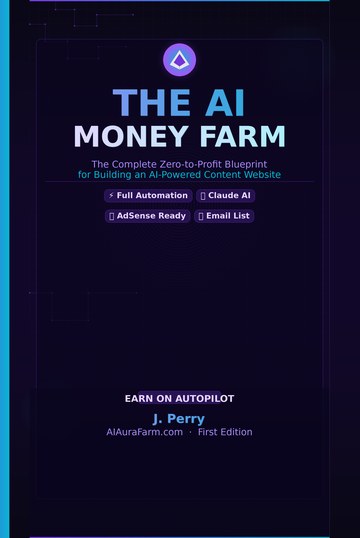
Want to Build a Site Like This One?
The AI Money Farm is the exact step-by-step blueprint behind AIAuraFarm.com.
Get It on Amazon →What Is Text-to-Video?
Text-to-video is an AI system that takes a written description and creates video footage to match it. Think of it like telling a director "I need a shot of a golden retriever running through a sunlit meadow at sunset" and getting back a 10-second clip that looks exactly like that, except a computer made it in seconds instead of a crew spending a day on location. The AI reads your text, understands what you're describing, and generates pixel-by-pixel video frames that tell that story visually.
Behind the scenes, text-to-video systems work by combining language understanding with video generation. First, they parse your prompt using LLM-like capabilities to grasp what you actually want. Then they generate frames sequentially or in parallel, using neural networks trained on massive amounts of video data to predict what motion, lighting, and composition should look like. Tools like Runway, Pika, and OpenAI's Sora do this by learning patterns from thousands of hours of real video-they internalize how physics works, how light behaves, how objects move through space. Some systems use multimodal approaches, meaning they understand both language and visual information in the same model, making the text-to-video connection more direct and coherent.
This matters because video creation used to require cameras, actors, locations, or expensive 3D animation software. Now marketing teams can generate product demo videos, educators can create explanatory animations, and creative professionals can iterate on ideas in minutes instead of days. The practical impact is speed and cost: a startup can test 20 video concepts for a campaign without paying a production company. The risk side is trickier-generated videos can spread misinformation convincingly, and copyright questions loom around what training data these systems used. There's also a novelty phase where AI-generated video has a certain "uncanny" feel, though that's improving rapidly.
The rule of thumb: text-to-video is best used for supplementary or creative content where minor imperfections are fine, and where speed beats perfection. It's excellent for brainstorming, animating concepts, or filling gaps in a workflow. But for mission-critical footage, regulatory content, or anything where accuracy matters legally, human creation or close human review is still the safer bet.