What Is Benchmarks?

Standardized tests that measure how well an AI model performs on specific tasks. Here is the plain-English deep dive: what it means, why it matters, and how to use the concept in practice.
Start Aura Farming
Top AI money moves delivered every morning - free forever.
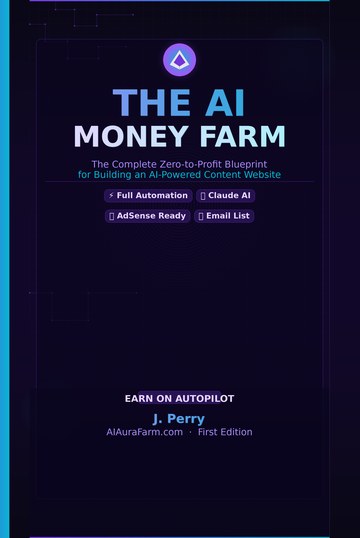
Want to Build a Site Like This One?
The AI Money Farm is the exact step-by-step blueprint behind AIAuraFarm.com.
Get It on Amazon →What Is Benchmarks?
A benchmark is basically a report card for AI models. It's a standardized test or dataset used to measure how well an AI system performs on a specific task. Think of it like how Consumer Reports tests cars on safety, acceleration, and fuel efficiency. In AI, benchmarks test things like how accurately a model answers questions, translates languages, writes code, or reasons through problems. Instead of vague claims like "our model is really good," benchmarks give you hard numbers: "this model scores 87% accuracy on this specific test." This lets you actually compare different LLMs and AI tools apples-to-apples, rather than trusting marketing hype.
You'll encounter benchmarks everywhere in AI discussions. There are famous ones like MMLU (testing general knowledge across subjects), HumanEval (testing code generation), and BLEU scores (testing translation quality). When a company announces "our model beats GPT-4 on reasoning," they're pointing to benchmark results. Most benchmarks consist of a dataset with known correct answers, and the AI model gets tested on how many it gets right. Some benchmarks are simple multiple-choice questions; others ask the model to generate long responses that humans or automated graders then evaluate. Different benchmarks test different capabilities, so a model might crush one test but underperform on another, depending on what it was trained to do.
Benchmarks matter because they cut through the noise. Without them, comparing AI models is like comparing restaurants based only on marketing slogans. Benchmarks let you make real decisions: Should you pay for this API or use a free alternative? Is upgrading worth the cost? Are there safety risks with this particular model? When you're choosing between tools for work, benchmarks on relevant tasks tell you what you're actually getting. They also push the entire AI industry forward. Companies compete to improve benchmark scores, which drives real innovation. However, benchmarks aren't perfect; models can be specifically tuned to perform well on known tests (called "overfitting to benchmarks") without actually being better at real-world tasks. And some benchmarks might test things that don't matter for your actual use case.
The rule of thumb: benchmarks are your best friend for comparing models objectively, but they're not the whole story. Look for benchmarks that match what you actually need the AI to do. If you need code generation, check HumanEval scores, not just general knowledge benchmarks. Don't assume a model that scores well everywhere will be perfect for your job. And remember that a benchmark score is a snapshot in time; new models come out constantly with better results. Use benchmarks as a starting point for comparison, but always test the models yourself on a representative sample of your real work before committing.